
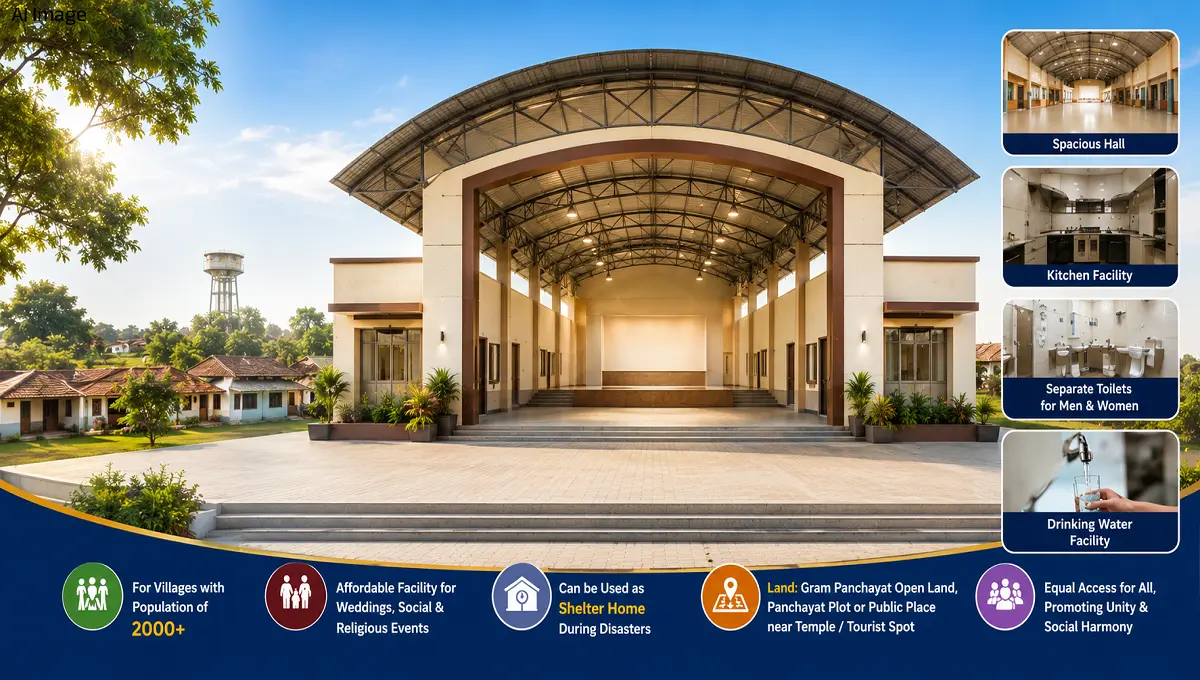
Atalwadi Yojana Gujarat has been approved by Chief Minister Bhupendra Patel to develop modern community halls in villages with facilities for social events, public gatherings, and disaster shelter support.
Atalwadi Yojana Gujarat
Atalwadi Yojana Gujarat: Under the leadership of Bhupendra Patel, the Gujarat government has approved the new “Atalwadi Yojana” aimed at improving public facilities in rural areas. The decision was taken during the state cabinet meeting with the objective of enhancing the quality of life and social infrastructure in villages.
Community Halls with Modern Facilities
State government spokesperson and minister Jitu Vaghani said that the scheme will provide specially designed “Atalwadi” structures in villages, capable of accommodating around 500 people. These facilities will include a large covered hall, kitchen area, separate toilets for men and women, and basic drinking water arrangements.
Benefits for Villagers
The scheme will mainly benefit villages with a population of more than 2,000. Families from lower and middle-income groups will be able to organize weddings, social gatherings, and religious events within their own villages at affordable rates, reducing the need to rent expensive venues in cities or towns.
Shelter Facility During Natural Disasters
Apart from social use, the Atalwadi structures will also serve as shelter homes during emergencies such as cyclones, heavy rainfall, or other natural disasters. The government believes the infrastructure will provide temporary safety and support to villagers during crisis situations.
Land Selection and Budget Allocation
For construction of these facilities, land owned by gram panchayats, designated public plots, or areas near temples and tourist spots will be considered. The Gujarat government has allocated ₹60 crore for the implementation of the scheme in the current financial year.
Promoting Social Harmony in Villages
Atalwadi Yojana Gujarat Officials stated that the scheme is expected to strengthen social unity and cooperation within villages. Since the facility will be accessible to all residents without discrimination, it is also expected to encourage social harmony and collective participation in community activities.