
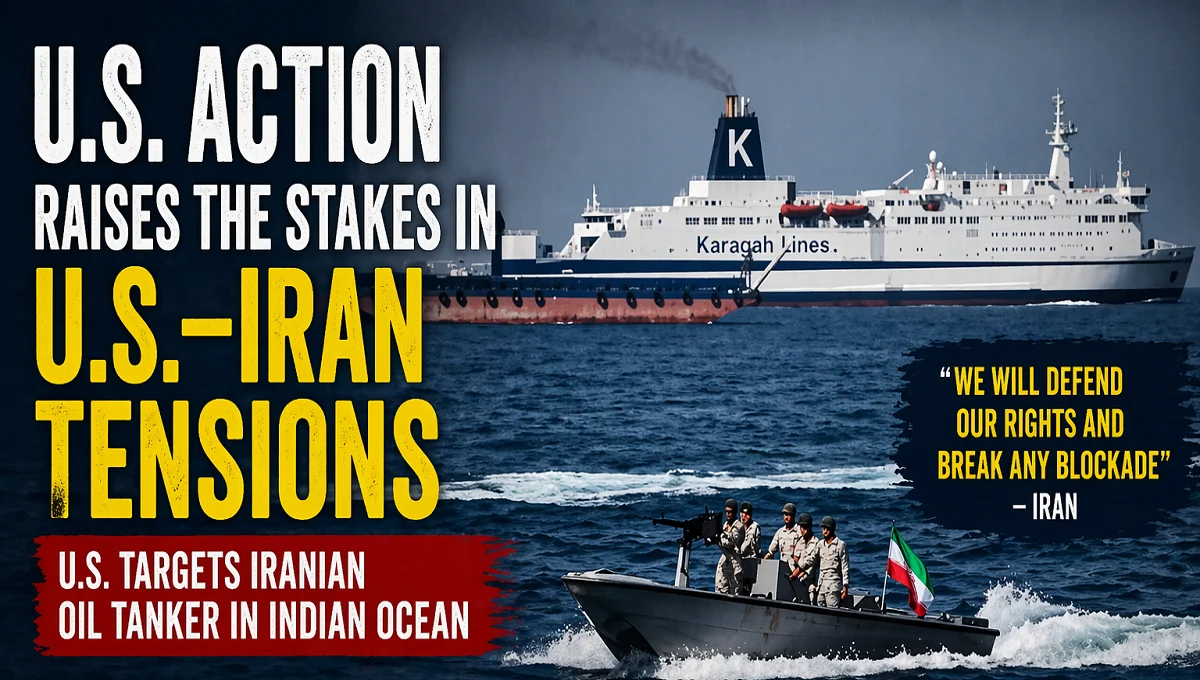
US-Iran tensions escalate as U.S. forces act against an Iranian oil tanker. Discover the global impact on oil trade, shipping routes, and Middle East stability.
US-Iran Tensions Rise
Amid escalating tensions in the Middle East, the conflict between United States and Iran appears to be entering a more intense phase. Recent reports suggest that the U.S. Navy has taken action against a tanker linked to Iranian oil transport, raising fresh global concerns.
Tensions in Key Maritime Routes
According to sources, the operation is believed to have taken place in the Indian Ocean region. This area is crucial for global trade and is closely connected to the Strait of Hormuz—one of the world’s most important oil transit chokepoints. A significant portion of global crude oil passes through this route.
Impact on Iran’s Oil Exports
Iran’s economy heavily depends on oil exports, especially under international sanctions. The U.S. action is being viewed as part of sanctions enforcement, targeting vessels suspected of bypassing restrictions. This could increase pressure on Iran’s so-called “shadow fleet,” which is often used to continue oil trade despite sanctions.
Political Reactions
Former U.S. President Donald Trump has framed such actions as part of a strong policy stance, while Iranian officials have condemned them as violations of international law. Iran has warned that continued maritime interference could provoke a response, potentially escalating tensions further.
Global Implications
These developments may lead to : Increased volatility in global oil prices, Greater risks for international shipping routes, Disruptions in trade between Asia, the Middle East, and Europe.
Conclusion
The US-Iran Tensions Rise standoff is no longer confined to regional boundaries. It now carries significant implications for global security and the economy. The coming days will be critical in determining whether diplomacy can ease tensions or if the situation escalates further.