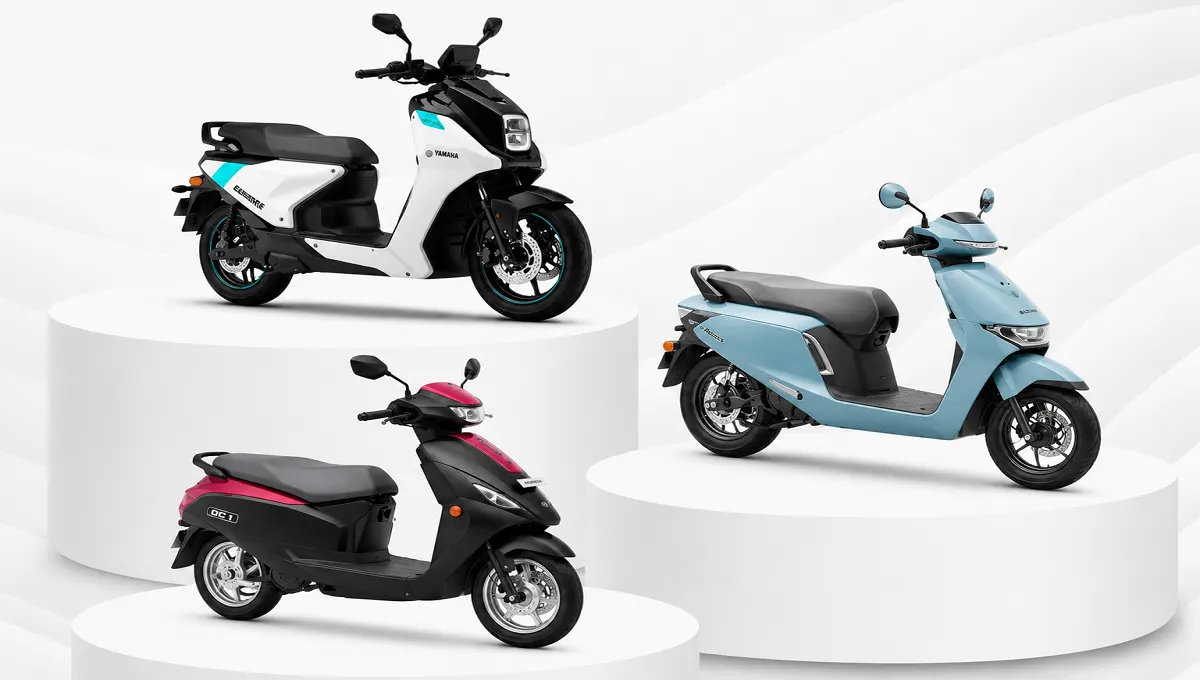
Suzuki Outsells Honda and Yamaha in E-Scooters in segment in India between January and April 2026. Suzuki e-Access leads with 2,261 units dispatched, ahead of Honda’s 1,284 units and Yamaha’s 426 units.
Suzuki Outsells Honda and Yamaha in E-Scooters in 2026
Suzuki has emerged as the frontrunner among Japanese two-wheeler manufacturers in the electric scooter segment, outselling both Honda and Yamaha in the first four months of 2026.
According to wholesale and retail sales data, the three Japanese giants — Suzuki, Honda, and Yamaha — collectively dispatched 3,971 electric scooters between January and April 2026. Suzuki accounted for a dominant share, contributing 57% of the combined wholesale volumes and nearly 50% of retail sales during the period.
Suzuki dispatched 2,261 units of its e-Access scooter from its Gurugram manufacturing facility, while retail deliveries stood at 1,161 units. The strong performance highlights the successful transition of Suzuki’s popular Access brand into the electric space.
In comparison, Honda Motorcycle and Scooter India sold a combined 1,284 units of the Activa e: and QC1 models, with retail sales of 1,039 units. Yamaha, which entered the market later with the launch of the EC-06 in February, has dispatched 426 units and retailed 140 units so far. The Yamaha EC-06 remains available only in select cities across a few states, suggesting potential for higher volumes as distribution expands.
Strong Start for Suzuki
Suzuki’s e-Access, priced competitively and backed by the company’s extensive sales and service network, has benefited from brand familiarity among Indian scooter buyers. Industry observers note that Suzuki’s focused launch strategy and timely ramp-up in production have given it an edge over its Japanese rivals in the initial phase.
“Honda and Yamaha have strong legacies in the Indian scooter market, but Suzuki has moved quickly to capture mindshare in the electric segment,” said an industry analyst who requested anonymity.
Japanese Brands Still Trail Domestic Players
While the Japanese trio is gaining traction, their combined sales remain modest compared to homegrown electric two-wheeler specialists and established players such as TVS Motor, Bajaj Auto, Hero MotoCorp, and Ather Energy, which continue to dominate the rapidly growing EV scooter market.
The entry of Japanese manufacturers is, however, seen as a positive development for the segment. Their emphasis on quality, reliability, and after-sales service is expected to raise overall consumer confidence in electric scooters.
Yamaha has already indicated plans to widen availability of the EC-06, while Honda is expected to leverage the strong Activa brand equity to push its electric offerings more aggressively in the coming months.
Outlook
With the Indian government continuing to push electric mobility through incentives and infrastructure development, competition in the premium and mid-premium electric scooter space is set to intensify.
Suzuki’s early lead among Japanese brands positions it well, but sustaining momentum will depend on consistent supply, competitive pricing, and addressing range anxiety — key factors for mass adoption of electric two-wheelers in India.
As the market evolves, all eyes will be on how Honda and Yamaha respond to Suzuki’s promising start in 2026. Suzuki Outsells Honda and Yamaha in E-Scooters in 2026