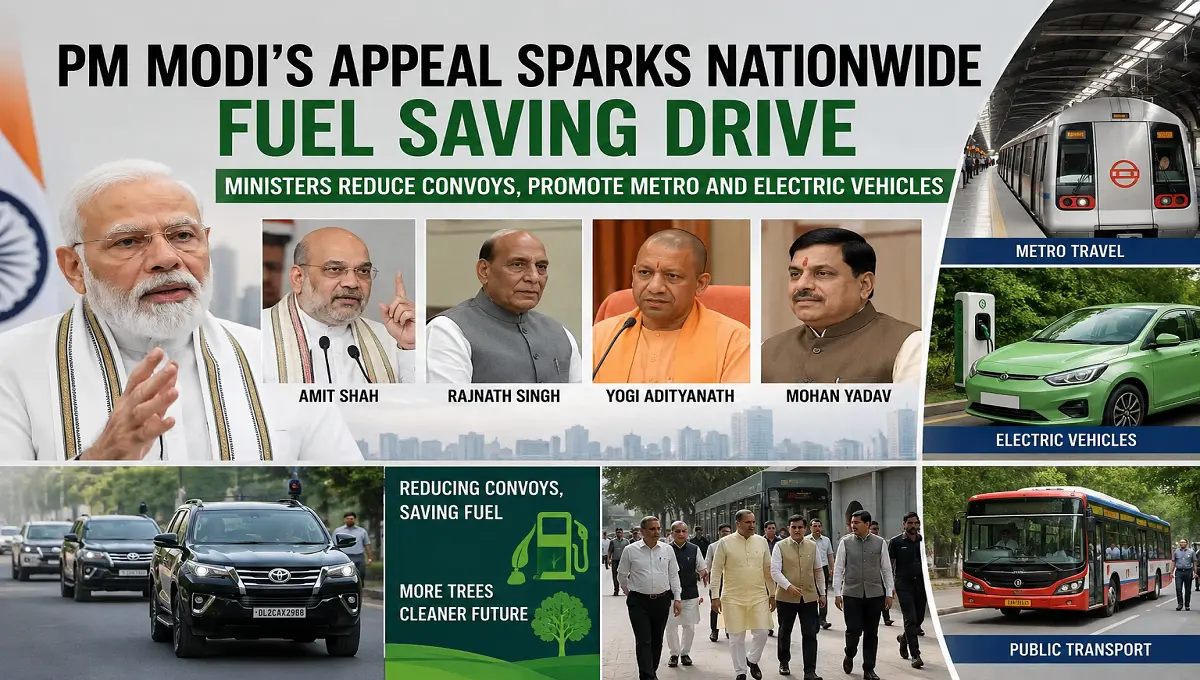
Following PM Narendra Modi’s appeal, the Fuel Saving Drive in India has gained momentum as Union ministers and chief ministers reduce convoys, promote metro travel, public transport, and electric vehicles to support energy conservation.
Fuel Saving Drive in India: PM Modi’s Appeal Sparks Nationwide Energy Conservation Campaign
Fuel Saving Drive in India: Amid the growing conflict in West Asia and the global energy crisis, Prime Minister Narendra Modi’s appeal for fuel conservation has received a widespread response across the country. Union ministers, chief ministers of various states, and government officials have started implementing several measures aimed at reducing fuel consumption and promoting energy conservation.
Leaders Respond to PM Modi’s Call
Following Prime Minister Modi’s appeal to citizens to support energy conservation efforts, political leaders have begun reducing the size of their security convoys, increasing the use of public transportation, and adopting electric vehicles. Union Home Minister Amit Shah and Defence Minister Rajnath Singh were also seen leaving their residences on Wednesday with significantly smaller convoys.
Uttar Pradesh Orders 50 Percent Reduction in Official Convoys
Uttar Pradesh Chief Minister Yogi Adityanath has directed a 50 percent reduction in the number of vehicles used in official convoys across the state. Officials have also been encouraged to adopt work-from-home practices and virtual meetings wherever possible. He urged citizens to make greater use of public transport, bicycles, and electric vehicles to support the fuel-saving campaign.
Madhya Pradesh Restricts Vehicle Rallies
Madhya Pradesh Chief Minister Mohan Yadav has reduced the number of vehicles in his official convoy from 13 to 8. The state government has also imposed restrictions on vehicle rallies and unnecessary ceremonial processions in an effort to minimize fuel consumption.
Delhi Promotes Metro Travel and Carpooling
Delhi Chief Minister Rekha Gupta announced that the government would use the minimum possible number of vehicles for official work. Ministers Ashish Sood and Kapil Mishra were seen travelling to their offices by metro, a move being viewed as a symbolic step toward promoting energy conservation. The Delhi government has also encouraged carpooling among ministers, legislators, and officials.
Rajasthan and Maharashtra Introduce New Restrictions
Rajasthan Chief Minister Bhajan Lal Sharma has instructed officials and public representatives to avoid unnecessary deployment of convoy vehicles. In Maharashtra, prior approval from the Chief Minister’s Office has now been made mandatory for the use of government aircraft in order to curb non-essential air travel.
Gujarat Adopts Public Transport and Smaller Convoys
In Gujarat, Chief Minister Bhupendra Patel’s convoy has been reduced to just three vehicles. The Governor has announced that he will use trains, state transport buses, and public transportation for travel within the state instead of helicopters or aircraft. Gujarat Minister of State for Home Harsh Sanghavi has also cancelled his planned visit to the United States in support of the fuel-saving initiative.
Bihar Encourages the Use of Electric Vehicles
Bihar Chief Minister Samrat Choudhary has started using an electric vehicle, while Deputy Chief Minister Vijay Kumar Choudhary announced that the number of vehicles in his convoy would be reduced by half. Other ministers in the state have also extended support to the initiative.
Fuel Conservation Campaign Could Become a Mass Movement
The nationwide response from political leaders comes at a time when rising geopolitical tensions and conflicts in West Asia have increased concerns over global fuel supply and energy security. Experts believe that if this initiative develops into a public movement, it could significantly reduce the country’s fuel consumption while also contributing positively to environmental protection.
Conclusion
The Fuel Saving Drive in India has emerged as a significant national initiative following Prime Minister Narendra Modi’s appeal for energy conservation amid the global fuel crisis. From reducing official convoys to promoting metro travel, public transport, and electric vehicles, leaders across the country are setting an example for citizens to follow.